SMARTER has developed BearAlert™, an intelligent work zone warning system designed to protect construction workers in high-risk traffic environments. Combining LiDAR sensors, networked edge computing, and a predictive time-to-entry algorithm, the system delivers real-time alerts to work zone personnel the moment an elevated crash risk is detected. Early results from its inaugural pilot deployment on Hillen Road near the Morgan State University campus confirm both the scale of the speeding problem in active work zones and the system’s practical value to the workers operating within them.
A National and Regional Safety Problem
Work zones present distinct hazards for both drivers and workers. Shifting road patterns, heavy equipment noise, and unpredictable traffic behavior contribute to elevated crash rates at these sites, particularly when vehicles pass at high speeds.
According to the National Highway Traffic Safety Administration, more than 100,000 work zone crashes occurred across the United States in 2023, producing approximately 39,000 injuries. That same year saw 815 fatal work zone crashes resulting in 899 fatalities (a roughly 50 percent increase over 2013) and an estimated $39 billion in comprehensive crash costs.
The picture in Maryland is similarly troubling. The Maryland Department of Transportation recorded 6,701 work zone crashes between 2020 and 2024, resulting in 2,365 injuries and 50 fatalities. The severity of the problem was underscored in 2023, when a collision on Baltimore’s I-695 beltway killed six workers.
How BearAlert™ Works
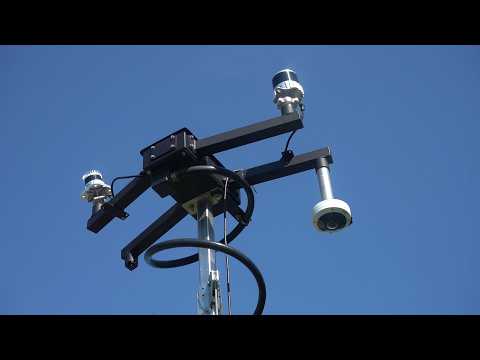
SMARTER Center researchers designed BearAlert™ to give work zone operators advance warning of approaching danger, providing critical time to react before a crash occurs. Using trajectory data gathered by roadside LiDAR sensors, the system’s edge computer applies a time-to-entry machine learning algorithm to evaluate the speed, proximity, and trajectory of each approaching vehicle. When a heightened collision risk is identified, the system simultaneously issues alerts to both workers and drivers.


A Multi-Sensory Alert System for Workers
Work zone operators receive multiple, redundant alerts engineered to cut through the noise and visual clutter of an active job site:
- An audible siren delivers a loud beeping notification across the site.
- A wearable haptic device delivers a vibration buzz felt even during heavy work.
- A flashing solar-powered beacon provides a visible warning from a distance.
Long-Term Traffic Data
Beyond real-time warnings, traffic data collected by BearAlert™can inform targeted safety measures at specific work zones, including traffic calming strategies and additional enforcement at high-risk locations.
Preliminary Findings from the Hillen Road Pilot
The SMARTER Center’s first real-world deployment took place on Hillen Road near the Morgan State University campus, where the posted speed limit is 35 mph. Over twenty-two working days of data collection, BearAlert™ logged an average of 5,126 vehicles passing the work zone per day. In total, 737 vehicles traveled at 45 mph or higher, 342 vehicles traveled at 55 mph or higher, and 40 vehicles traveled at 65 mph or higher.
Feedback from the construction crew reinforced both the need for the system and its effectiveness. Workers reported ongoing concerns about fast-moving vehicles near the site and welcomed the addition of the alert system. Seven members of the crew wore the haptic device during the pilot and reported that the buzz was reliably felt while working, comfortable to wear, and triggered at an appropriate frequency. The audible siren was clearly heard on-site. The flashing warning light, however, proved less effective in direct sunlight.
In each case, workers who received a buzz or heard the siren responded by looking toward the road to assess the approaching vehicle, indicating that Bear Alert successfully prompted work zone operators to evaluate their surroundings in response to heightened safety risks. These early findings will inform the next iteration of the system’s design, making it more responsive to the needs of workers in the field.
Applications and Impact
BearAlert™ advances the SMARTER Center’s core mission of developing implementable transportation technologies that improve safety and efficiency on the region’s roadways. Its applications extend across the transportation sector:
- For state and local transportation agencies, BearAlert™ offers a deployable safety solution for active construction and maintenance sites with traffic data that supports evidence-based decisions on speed management and enforcement.
- For the construction industry, the system provides a real-world tool that protects workers and reduces liability exposure on active job sites.
- For agency partners and policymakers, BearAlert™ demonstrates how LiDAR-based detection and connected vehicle technology can be integrated into existing infrastructure to address one of the nation’s most persistent roadway safety challenges.
- For the next generation of transportation professionals, the system provides Morgan State students with hands-on experience developing, deploying, and evaluating intelligent transportation systems in real-world conditions.
Partners
The SMARTER Center has partnered with the Baltimore City Department of Transportation, the Maryland Highway Safety Office, transportation consulting firm Mead & Hunt, technology firm TS&T, and Stella May Contracting, a Maryland-based civil construction contractor, to deploy and test BearAlert™ in real-world work zones.
What’s Next
A provisional patent is currently being pursued for the BearAlert™ technology. The SMARTER Center will continue pilot testing and data collection on Hillen Road and is working to expand deployment to additional work zone sites across Maryland.