The SMART Intersection is a real-world testing facility for connected and automated vehicle (CAV) technologies, developed by the SMARTER Center. Operating as a living laboratory, the system uses LiDAR sensors, cameras, and Vehicle-to-Everything (V2X) communication to measure interactions between road users in mixed traffic, prevent collisions, prioritize transit and emergency vehicles, and provide municipal governments with high-resolution traffic data. The facility bridges the gap between theoretical CAV research and practical deployment.
How SMART Intersections Work
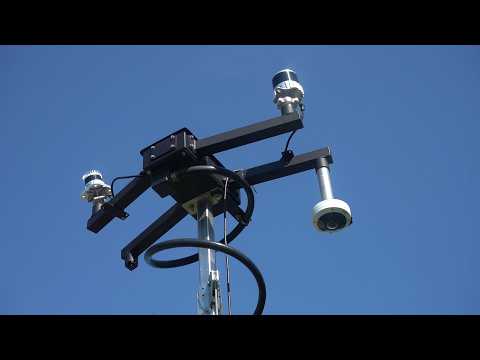
Each SMART Intersection integrates a network of sensors, computing hardware, and communication systems that continuously monitor traffic and pedestrian movement and relay actionable information to road users. Both the LiDAR sensors and Roadside Units connect directly to the traffic signal controller, enabling coordinated signal optimization based on real-time conditions. Two-LiDAR configurations at busier intersections reduce blind spots and improve detection accuracy.
The system’s key components work together to create a comprehensive traffic management solution:
- LiDAR sensors — Light Detection and Ranging systems collect real-time spatial data and produce detailed 3D maps of the intersection environment.
- CCTV cameras — Capture real-time visual data and validate LiDAR readings as needed.
- Roadside Units (RSUs) — Facilitate communication between system components and connected vehicles.
- Edge Computers — Process and analyze sensor data on site in real time.
- On-Board Units (OBUs) — Allow vehicles to send and receive V2X data.
- Dynamic Messaging Systems — Alert drivers and pedestrians to potential hazards.
Enhancing Safety and Efficiency
SMART Intersections significantly improve road safety through several applications:
Pedestrian and Cyclist Protection
The system’s early warning capabilities enhance drivers’ spatial awareness of vulnerable road users, helping prevent collisions before they occur. LiDAR technology tracks pedestrian and cyclist movements over time, identifying potential conflict points and allowing for proactive safety measures.
Transit and Emergency Vehicle Priority
Tests are currently underway for vehicle priority systems. When equipped with OBUs, public transit vehicles can request priority at traffic signals, improving schedule reliability. This same technology grants immediate priority to emergency vehicles, helping first responders reach their destinations more quickly.
Data-Driven Infrastructure Improvements
By collecting and analyzing detailed traffic pattern data, SMART Intersections provide valuable insights for urban planners. This information helps identify areas needing infrastructure improvements and supports evidence-based decision-making for future development.
Data Collection and Analysis
The SMART Intersection’s data collection capabilities extend well beyond traditional traffic counts. The system continuously tracks vehicle speeds and trajectories, detects near-misses, identifies red- and yellow-light runners, monitors signal phase performance, and maps pedestrian movements—including events outside designated crosswalks.
Edge computers process raw sensor data on site, and machine learning algorithms identify patterns and potential conflicts before they become crashes. Outputs feed into a series of dashboards that turn millions of data points into actionable information for transportation professionals.
Key data streams include:
- Object tracking — Every vehicle, cyclist, and pedestrian moving through the intersection receives a unique ID and is tracked over time.
- Conflict and near-miss detection — Post-Encroachment Time (PET) analysis identifies critical zones and high-risk moments.
- Count and speed data — Volumes by mode (passenger vehicle, truck, bus, pedestrian, bicycle) and approach.
- Signal performance — Phase intervals, green allocation, and red/yellow runner statistics, accessible through the ThruGreen dashboard.
- Pedestrian behavior — Heat maps reveal preferred crossing routes and out-of-crosswalk events, informing infrastructure design.
- Weather verification — Comparative LiDAR/CCTV analysis confirms sensor accuracy across rainy, snowy, and clear conditions.
Emerging Safety Applications
The SMART Intersection serves as the foundation for a growing portfolio of LiDAR- and V2X-based safety technologies developed at the SMARTER Center.
Work Zone Alert Safety System — LiDAR sensors and predictive algorithms detect potential collisions in active construction zones and issue real-time alerts to workers through audible, haptic, and visual warnings. With Maryland averaging more than 1,400 work zone crashes per year, the system addresses a critical safety need for construction and maintenance crews.
Real-Time Pedestrian Detection (RPD) — LiDAR sensors detect pedestrians crossing the intersection and relay warning messages through Roadside Units to nearby vehicles equipped with On-Board Units. These real-time alerts provide additional protection for pedestrians, especially in low-visibility conditions.
All-Red Extension (ARE) — Using LiDAR and predictive algorithms, the All-Red Extension system determines whether a vehicle approaching during the yellow phase cannot safely stop before the signal turns red. When the system identifies a vehicle that will enter the intersection after the light changes, it sends a command to the traffic signal controller to extend the all-red phase, preventing collisions with cross-traffic.
Traveler Information and Geofenced Safety Messages — Vehicles equipped with OBUs receive Signal Phase and Timing (SPaT) messages, Basic Safety Messages (BSMs), and Traveler Information Messages (TIMs) through an in-vehicle dashboard display. Geofenced safety messages like school-zone warnings or construction-zone alerts are pushed to vehicles only when they enter a defined area, ensuring drivers receive relevant information at the right moment. Transit vehicles equipped with OBUs can also request priority at signals to improve schedule reliability, while emergency vehicles receive immediate priority to reduce response times.
Pedestrian Extension — Detects pedestrians on sidewalk ramps and crosswalks during flashing “don’t walk” signals, allowing them an additional six seconds to safely cross the intersection. This added safety measure is particularly useful for children, older adults, and those with limited mobility.
Vehicle Conflict Dashboard
This dashboard shows the frequency of conflicts between vehicles and between vehicles and non-vehicles at the SMART Intersection at Cold Spring and Hillen Road near the Morgan State University Campus. It then generates a safety score, reflecting how collision risk changes over time at the intersection. The dashboard also tracks Post-Encroachment Time (PET) – the time gap between road users passing through the same point. The map shows PET values as bubbles, where smaller bubbles indicate higher collision risk. The visualization categorizes conflicts by type (vehicle-to-vehicle, vehicle-to-bicycle) and displays trends over time to identify potential safety concerns.
From SMART Intersection to SMART Corridor
The SMART Intersection’s modular design enables expansion and replication. Three signalized intersections along Baltimore’s Hillen Road—at East Cold Spring Lane, Argonne Drive, and 33rd Street—now form the SMART Corridor, a 1.5-mile connected vehicle testbed that has continuously expanded its capabilities since launching in 2022. Upgraded LiDAR units and traffic signal controllers were installed in March 2025.
Portable LiDAR Deployments
Building on the success of the fixed installations, the SMARTER Center has developed a portable SMART Intersection system containing an Edge Box, cellular modem, LiDAR sensor, and RSU components. In partnership with Baltimore City, the mobile unit collects before-and-after data at nine Baltimore intersections along three corridors undergoing safety improvements, supported by the USDOT’s Safe Streets for All (SS4A) grant. The Center is also conducting a before-and-after study with the Maryland Department of Transportation (MDOT) evaluating the effectiveness of speed cushions on MD-195.
The portable system allows rapid deployment for special events, construction zones, or other temporary monitoring needs, giving state and local agencies a flexible toolkit for traffic analysis.
West North Avenue Implementation
In partnership with the West North Avenue Development Authority (WNADA), five SMART Intersections are being deployed along Baltimore’s historic West North Avenue corridor, spanning from Bloomingdale Road to Mt. Royal Avenue. The deployment supports WNADA’s vision for a vibrant commercial district served by safer, more reliable streets.

For more information about implementing SMART Intersection technology in your community, contact the National Transportation Center at 443-885-3666 or ntcstaff@morgan.edu.