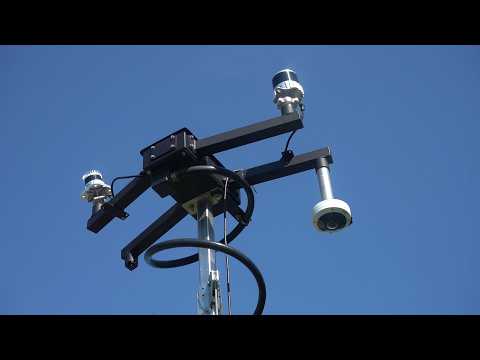
The SMART Intersection utilizes the latest advances in LiDAR and connected vehicle technology to create safer streets for all road users.




The SMART Intersection utilizes the latest advances in LiDAR and connected vehicle technology to create safer streets for all road users.

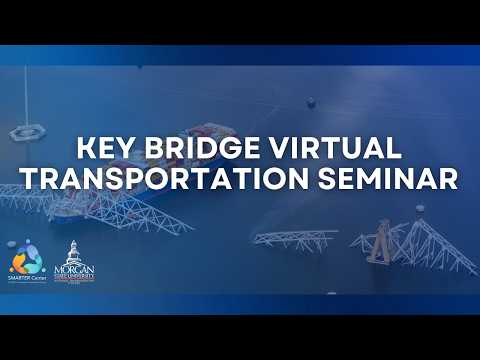
Learn more about our traffic simulations and impact studies responding to the Francis Scott Key Bridge Collapse.

SMARTER leverages the unique expertise of the region's transportation community to develop research-backed mobility solutions.

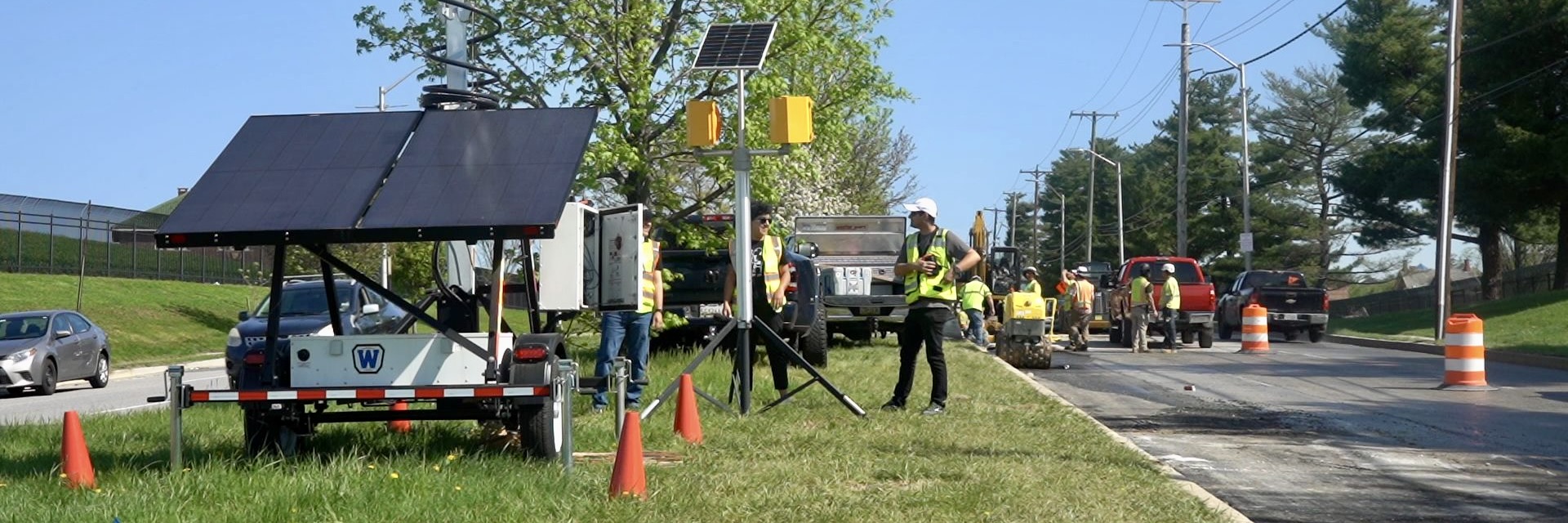
The SMARTER Center has begun pilot testing Bear Alert, a new intelligent work zone warning system on Hillen Road adjacent...

The National Transportation Center (NTC) and the Safety and Mobility Advancements Regional Transportation and Economics Research (SMARTER) Center are pleased...

The Safety and Mobility Advancements Regional Transportation and Economics Research (SMARTER) Center welcomed representatives from the U.S. Department of Transportation’s...

This project aims to develop an inverse problem framework for bridge structural health monitoring (SHM) using displacement data as the...

This project will employ a synthetic population approach to examine the influence of public charging infrastructure on electric vehicle (EV)...

This project continues to advance transportation safety through the deployment and scaling of cutting-edge technologies for near real-time monitoring of...

This project assesses the performance benefits of implementing multi-agent reinforcement learning (MARL)-based cooperative platooning and cooperative adaptive cruise control with...

Limited sensor coverage and fragmented, mode-specific modeling infrastructure hinder the holistic monitoring of modern transportation networks. The resulting data blind...

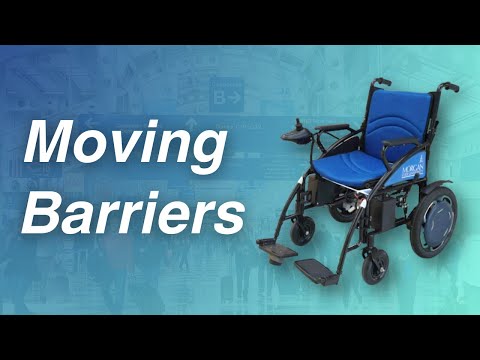
Morgan State University’s autonomous wheelchair (AW) project has completed three phases of research and development, culminating in a high-profile public...

Roadway safety remains one of the most persistent transportation challenges across the Mid-Atlantic region, particularly in rural and small urban...

One of the promises of connected vehicle (CV) technologies, such as vehicle-to-infrastructure (V2I) and vehicle-to-everything (V2X), is the ability to...

Heavy snow substantially degrades the quality and reliability of vision-based traffic monitoring, yet most existing perception benchmarks focus on onboard...

Phase IV builds upon the infrastructure and algorithms developed in Phases I through III by expanding the SMART corridor testbed...

In transportation networks, project alternatives are often highly interrelated because changes in network components redistribute flows, affecting the benefits obtainable...

Flaggers are essential for maintaining traffic safety in work zones, serving as human traffic controllers who coordinate alternating traffic through...

Autonomous driving systems (ADS) increasingly rely on vision-based perception and learning-based decision modules, yet real-world safety depends on whether these...

Enhancing Traffic Signal Controller Performance Using LiDAR Data applies software-in-the-loop testing to a previously developed approach for optimizing traffic signal...

Microscopic traffic simulation software allows users to model traffic flow, assess traffic management strategies, and optimize transportation systems for efficiency....

The Hillen Road & 33rd Street Intersection Analysis uses infrastructure-based LiDAR sensing to document traffic operations and safety conditions at...

This project develops a high-fidelity digital twin of the SMARTER Center’s Connected and Automated Vehicle (CAV) testbed at Morgan State...

Pedestrians and bicyclists are highly influenced by their perceptions of street environments, making it important to assess the spatial quality...

This research enhances transportation safety through large-scale deployment of intelligent video analysis and artificial intelligence techniques for real-time infrastructure monitoring,...

This research enhances transportation safety through large-scale deployment of intelligent video analysis and artificial intelligence techniques for real-time infrastructure monitoring,...

This research develops and evaluates an advanced work zone alert system designed to protect highway workers from errant vehicles, responding...

This research addresses the critical need for integrating transportation asset management (TAM) with transportation planning practices in rural and small...

This research develops innovative methods for improving intersection safety through three integrated approaches: optimized intersection planning, connected and automated vehicle...

This research develops and evaluates optimal speed control strategies for Connected and Automated Vehicles (CAVs) at the network level, addressing...

This research conducts field deployment and testing of enhanced traffic signal control systems using the Laguna-Du-Rakha formulation to optimize signal...

This research develops a physics-informed deep learning (PIDL) framework to address critical data blind spots in transportation networks caused by...

This research enhances transportation safety through large-scale deployment of intelligent video analysis and artificial intelligence techniques for real-time infrastructure monitoring,...

This research addresses speeding issues on residential roads that frequently result in crashes involving non-motorized road users by utilizing connected...

This research enhances transportation infrastructure design processes by addressing limitations of modular workflows where roadway, hydrology, lighting, and utilities design...

This research develops a Generative AI framework for evaluating transportation agency resolution of public complaints and comments, addressing the challenge...

This research establishes a comprehensive evaluation framework for Quick Build interventions using portable LiDAR technology, driving simulation, and field data...

This research advances Connected and Automated Vehicle infrastructure through Phase III expansion of an established testbed, integrating LiDAR-powered safety applications...

This project continues exploring Crime Prevention through Environmental Design (CPTED) principles in public transit stations to enhance community safety. Through...

This paper examines the institutional and regulatory factors driving excessive delays and cost overruns in American transportation infrastructure development. The...

The purpose of the study is to enhance safety for all participants on the road by creating an advanced Connected...

This research proposal focuses on the innovative integration of multimodal transportation management and advanced signal control within a virtual reality...

This research proposal aims to enhance pedestrian safety by developing a novel Pedestrian Collision Avoidance System that integrates Connected Vehicle...

This project seeks to enhance urban transportation efficiency through the development and implementation of Transit Signal Priority (TSP) integrated with...

This project proposes a comprehensive framework to integrate volunteers into the operations of transit agencies in rural and small urban...

This project proposes a comprehensive investigation of the regional impacts following the Francis Scott Key Bridge collapse in Baltimore. Through...

This project explores planning and asset management practices for transportation systems in small urban and rural communities. The study will...

This project proposes to improve a framework for analyzing and optimizing interrelated transportation infrastructure projects under conditions of uncertainty. The...

Building on a successful initial phase, this project aims to further develop a Connected and Automated Vehicle (CAV) testbed at...

This project aims to leverage Large Language Models (LLMs) to enhance the analysis of public complaints and suggestions related to...

This research investigates the implementation of a human-in-the-loop Connected Cruise Control (hCCC) system for enhanced driver safety and fuel efficiency....

This project focuses on developing an agent-based model to optimize door-to-door freight movement by simulating container flows across multimodal networks....

This project proposes to enhance a decentralized traffic signal controller based on a Nash Bargaining game-theoretic framework, integrating a Kalman...

This project explores the use of Virtual Reality (VR) as a public involvement tool in transportation planning, offering an immersive...

Morgan State University’s autonomous wheelchair (AW) pilot program is designed to allow travelers with disabilities to comfortably navigate a busy...

This study examines the effects of environmental factors and urbanization on Non-Motorized Transportation (NMT) infrastructure facilities in Delaware, with a...

While the advantages of multimodal passenger transportation planning in urban environments have been extensively studied and well-documented, transferring these planning...