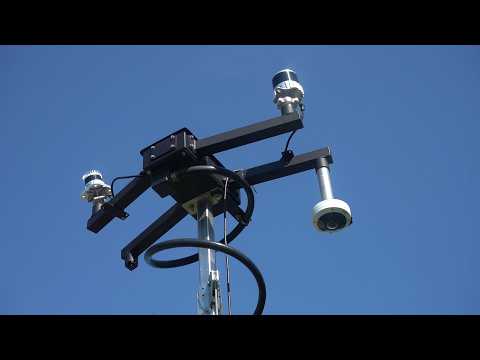
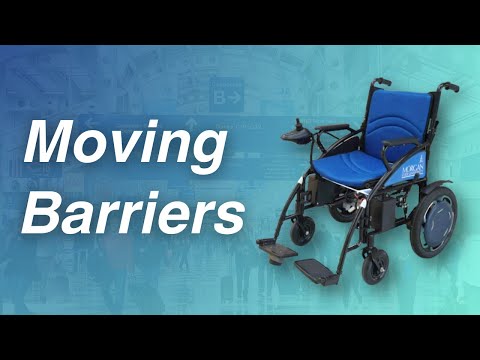
Morgan State University’s autonomous wheelchair (AW) project has completed three phases of research and development, culminating in a high-profile public demonstration at Baltimore/Washington International Thurgood Marshall Airport (BWI) in 2025, growing from a single prototype to a fleet of three LiDAR- and camera-equipped wheelchairs operable via the UrbanFlow smartphone application.
Phase 4 advances the project on three fronts, collectively moving the technology from a research prototype toward real-world, scalable deployment. First, researchers will complete a Fleet Management and Operator Dashboard, replacing the existing one-to-one operator model with a centralized system capable of controlling the full wheelchair fleet. Second, the team will deploy and test the AW system in a new indoor environment, the Morgan State University Health and Human Services (HHS) Center. Third, it will develop a Digital Twin of the UrbanFlow deployment environment, enabling virtual simulation of wheelchair navigation scenarios to accelerate testing and support future multi-site planning.
Organized across five tasks, Phase 4 will deliver a Fleet Management and Operator Dashboard enabling one operator to simultaneously oversee, dispatch, and control the entire wheelchair fleet, with live location tracking, battery and status monitoring, automated low-battery alerts, remote override, centralized dispatch, fleet analytics, and fault and maintenance flagging. The dashboard will be validated through live multi-wheelchair sessions at BWI and on campus with iterative operator usability testing. The team will map, configure, and deploy the AW system within the HHS Center to establish a fully operational navigation environment at a new site type, and will develop a Digital Twin, a virtual replica of the physical deployment environment integrated with UrbanFlow, as a simulation and planning tool.
Universities Involved
Morgan State University
Principal Investigators
Mansoureh Jeihani
Kofi Nyarko
Expected Research Outcomes & Impacts
Phase 4 will deliver four primary outcomes: a Fleet Management Dashboard transitioning the project from one-to-one prototype operation to scalable one-to-many fleet control; a validated AW deployment at the HHS Center demonstrating system adaptability across institution types; a Digital Twin of the UrbanFlow environment enabling low-cost virtual testing and future site planning; and a reproducible deployment methodology applicable to new facilities with minimal reconfiguration.
The operational impact is broad: approximately 27 million passengers with disabilities traveled by air in 2019, and wheelchair-assistance wait times at busy airports frequently exceed 30 to 40 minutes due to chronic staff shortages and surging demand. By enabling a single operator to manage an entire fleet, the system directly addresses these constraints, advancing scalable autonomous mobility for travelers with disabilities across airports and other institutional environments.
Subject Areas
Autonomous Mobility, Fleet Management, Digital Twin, LiDAR Navigation, Airport Operations