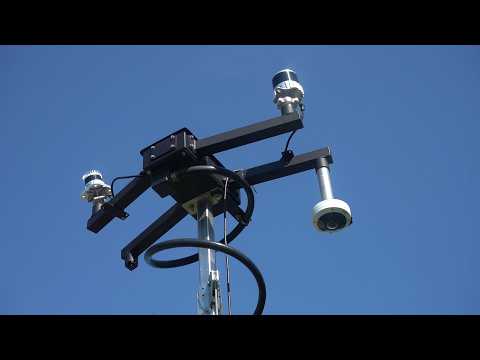
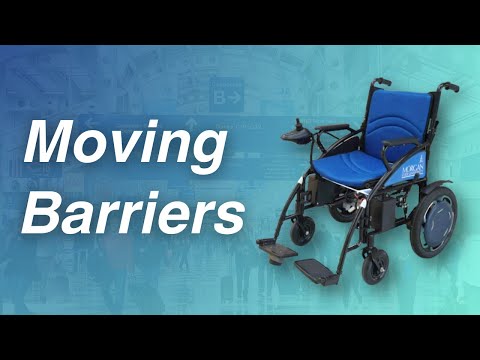
Morgan State University’s autonomous wheelchair (AW) pilot program is designed to allow travelers with disabilities to comfortably navigate a busy transportation hub without an attendant. To effectively implement and launch the autonomous wheelchair in a dynamic, real-world setting, researchers from Morgan State University are engaging in a phased series of testing and validation exercises at Baltimore/Washington International Airport to evaluate the system’s reliability and effectiveness. The autonomous wheelchair was created by modifying a conventional powered wheelchair with additional instruments that provide perception, navigation, and steering capabilities similar to technologies used in autonomous vehicles. Researchers installed cameras and LIDAR sensors for perception, and a general-purpose, single-board computer for processing.
The autonomous wheelchair is in its fourth iteration, representing a culmination of more than five years of research and development conducted by technicians from a variety of backgrounds. The wheelchair can currently operate on a guided path, though testing of a trackless model is ongoing. The project intends to facilitate autonomous travel in large buildings such as airports, hospitals, museums, college campuses, and military bases. During the early phases of testing, wheelchair passengers are limited to researchers only.
Universities Involved
Morgan State University
Principal Investigators
Mansoureh Jeihani
Kofi Nyarko
Funding Sources and Amounts
Morgan State University Office of Tech Transfer: $70,000 ($10,000 + $30,000 + $30,000 for Phases 1-3)
SMARTER Center: $50,000
MDOT-Matching Fund: $50,000
MDOT-MVA-BWI Airport: In-kind matching (free space and testing)
Start Date
June 1, 2024
Completion Date
November 30, 2025
Expected Research Outcomes & Impacts
The project aims to enhance independence and quality of life for people with mobility limitations. Anticipated outcomes include increased mobility in transportation hubs, reduced reliance on human assistance, and a viable model for autonomous mobility device implementation. The successful pilot program at BWI Airport will serve as a model for implementation at other transportation facilities nationwide.
Subject Areas
Autonomous systems, Mobility, Disability accommodation