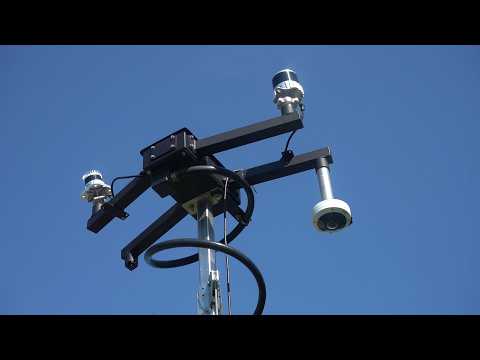
A field evaluation of a recently developed cooperative platooning algorithm (developed by PI Park) that does not require connectivity in mixed traffic has shown significant benefits over adaptive cruise control. One of the critical challenges of implementing the CACC algorithm is appropriately identifying connected and automated vehicles to form a cooperative adaptive cruise control system. This identification is not a trivial task mainly because each connected vehicle does not share its vehicle information due to privacy concerns. In addition, this connectivity opens cybersecurity issues. As shown by PI Park, connected vehicles’ communications are vulnerable. The proposed connected vehicle identification system (CVIS) relies on relatively few sensors, including radar sensors, vehicle-to-vehicle communication devices (e.g., C-V2X), and a global position system (GPS). The preceding vehicle identification system (PVIS) was developed by PI Park, and is currently being expanded to improve its performance by considering surrounding vehicles (needed for the lane-change recommendations) and the use of GPS velocity. A simulation-based study showed significant improvements over the immediately preceding vehicle identification system using only GPS distance.
Universities Involved
University of Virginia
Principal Investigators
Dr. Brian Park
Funding Sources and Amounts
USDOT: $100,000
Start Date
September 1, 2023
Completion Date
September 1, 2024
Expected Research Outcomes & Impacts
The team will pursue the commercialization of this technology and prototype system. Our ultimate commercialization plan is to develop the surrounding vehicle identification system and enable cooperative adaptive cruise control with unconnected vehicles (CACCu). The SMARTER UTC fund along with the CCI commercialization fund is expected to help design and test a preliminary prototype system for an NSF I-Corps team program or NSF Partnerships for Innovation Program application. Upon successful field demonstration of the connected vehicle identification system preliminary prototype, the team will seek commercialization and licensing opportunities. The system is a must for forming cooperative adaptive cruise control, and any cooperative control involving vehicle-to-vehicle specific communications (e.g., cooperative lane change).
Subject Areas
Connected and Automated Vehicles, Infrastructure Design and Planning