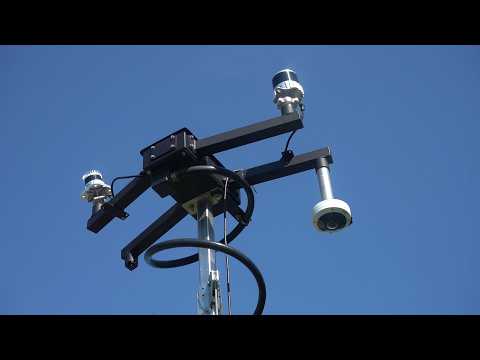
This project aims to develop an inverse problem framework for bridge structural health monitoring (SHM) using displacement data as the primary diagnostic input. Traditional SHM methods based on finite element model updating and contact-based sensor networks are computationally demanding and require extensive field calibration, while acceleration-based techniques struggle to detect local damage. To address these limitations, the study applies inverse problem-solving methodologies that enable the direct inference of unknown structural parameters—such as stiffness variations, damage locations, and boundary conditions—from displacement measurements. Recent advancements in computer vision technologies have significantly improved the accessibility, accuracy, and cost-effectiveness of displacement data collection, making bridge condition assessment increasingly feasible. Through data analysis, inverse modeling, and validation, the research develops a validated framework for bridge condition assessment based on displacement data, reducing reliance on contact sensor networks and improving the accuracy of local damage detection across transportation infrastructure.
Universities Involved
Howard University
Principal Investigators
Claudia Marin
Expected Research Outcomes & Impacts
The project will deliver a comprehensive review of dynamic inverse problems to identify optimal methods and assumptions for structural assessment using displacement data; a methodology to infer structural parameters such as stiffness variations, boundary conditions, and damage directly from displacement measurements; and numerical simulations that test the feasibility and accuracy of the inverse problem framework across various conditions and damage scenarios. The team will integrate velocity and displacement data with advanced signal processing techniques to enhance measurement accuracy and reliability, and will expand the dataset pool by identifying additional experimental data from instrumented bridges, shake table tests, and other studies beyond the Z24 Bridge Monitoring Experiment and the Curved Bridge Seismic Performance Experiment. The framework will be validated using these real-world experimental datasets, with comparative analysis against traditional SHM methods, and results disseminated through conference presentations and peer-reviewed journal publications.
Subject Areas
Structural health monitoring, bridge inspection, computer vision