The SMARTER Center has begun pilot testing Bear Alert, a new intelligent work zone warning system on Hillen Road adjacent to the Morgan State University campus. Early data confirms widespread speeding through the active work zone and points to the system’s value for crews working in close quarters with traffic.
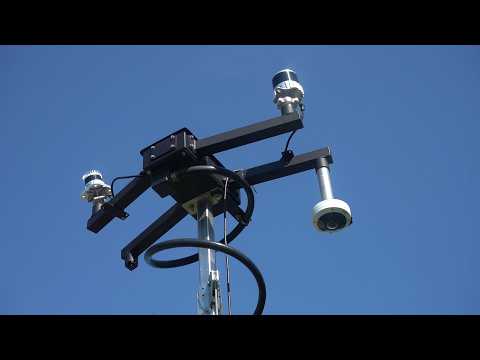
Bear Alert combines roadside LiDAR sensors, networked edge computing, and a predictive time-to-collision algorithm developed by SMARTER researchers to detect approaching vehicles in real time. When a heightened collision risk is identified, the system simultaneously alerts work zone personnel through an audible siren, a wearable haptic device, and a flashing solar-powered beacon.
Bear Alert logged 50,821 vehicles passing the work zone, a narrow corridor with a 35 mph speed limit. Of those, 288 vehicles traveled at 45 mph or higher, 83 at 55 mph or higher, and 16 at 65 mph or higher. Five members of the construction crew wore the haptic device during the pilot and reported that the vibration was reliably felt during heavy work, comfortable to wear, and triggered at an appropriate frequency. Workers who received a buzz or heard the siren consistently looked toward the road to assess the approaching vehicle, confirming that the system effectively prompts crews to evaluate roadway conditions in response to elevated risk.
The Hillen Road pilot is the product of a coordinated partnership between the SMARTER Center, the Baltimore City Department of Transportation, the Maryland Highway Safety Office, transportation consulting firm Mead & Hunt, technology firm TS&T, and Stella May Contracting, a Maryland-based civil construction contractor. A provisional patent for the Bear Alert technology is currently being pursued.
Pilot testing and data collection on Hillen Road will continue, and the SMARTER Center is working to expand Bear Alert deployment to additional work zone sites across Maryland.