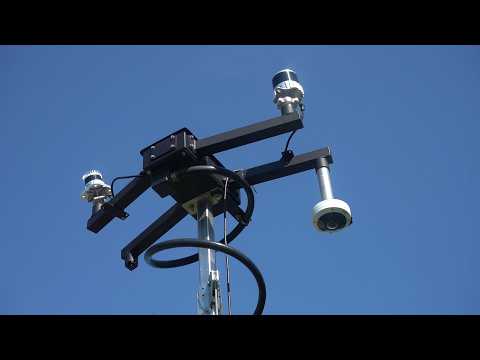
Morgan State University piloted Bear Alert, a portable system that warns road crews when a vehicle is approaching their work zone too fast. A solar-powered trailer with two LiDAR sensors and a 360-degree camera tracks the speed and path of oncoming traffic. When a vehicle poses a threat, the system gives workers 4 to 5 seconds of warning through a siren, a flashing beacon, and a wearable device that vibrates. The pilot ran for 22 working days in spring 2026 on Hillen Road in Baltimore, between 33rd Street and Argonne Drive, with seven crew members wearing the devices. Over that time the system monitored 112,770 vehicles and flagged 737 traveling 45 mph or faster through the 35 mph work zone.
Universities Involved
Morgan State University
Principal Investigators
Mansoureh Jeihani, Mojtaba Naseri, Charles Dankwa, Ehsan Mehryaar, Ramina Javid
Research Outcomes & Impacts
The pilot showed that LiDAR-based tracking can reliably spot dangerous drivers approaching a work zone and warn crews in time to react. Workers rated the wearable vibration alert as the most effective warning, well ahead of the siren and flashing light, which were harder to notice on a noisy job site. Crew members said the devices were comfortable and didn’t distract them, and they strongly wanted to use the system again. Next steps include a provisional patent, longer-term testing on Hillen Road, and expansion to other work zones across Maryland.
Subject Areas
Work zone safety, LiDAR sensing, wearable safety technology